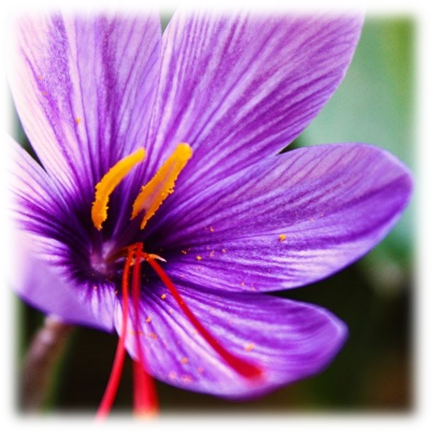
Saffron
Golden spice of Kashmir
Saffron
is used in the preparation of a beverage called Kahwa, a Kashmiri tea flavored
with cinnamon, cardamom, and saffron. Saffron in the valley is being grown in
the karewa as well as in other categories of loamy soils. This is a species of
flower the plant grows upto 10-30 cm high. Only the stigmas of Crocus
are used as spice.
Saffron
cultivation in Kashmir valley has its historical roots from Iran. It is grown
in many districts of J&K such as Budgam, Srinagar and Kishtwar apart from
Pampore which is famous for its high grade saffron. In Pampore tehsil
alone, saffron is grown extensively on 3,200 hectares of land.
Dry
conditions due to climate change are blamed to be one of the causes to reduce
yields of the world's most expensive spice. It got halved in the past two
decades, threatening the future of a cash crop that has brought wealth to the
region for 2000 years. Warming temperatures caused by climate change have made
rainfall scanty, depriving the saffron fields. According to the Department of
Agriculture Kashmir, the production of Kashmiri saffron has declined by 65%
over the past two decades from 16 metric tonnes to 5.6 metric tonnes.
With
an aim to promote Kashmiri saffron, the government is promoting his level best
to introduce the Kashmiri saffron in global markets. And also it has recently
received the geographical indication tag (GI). In 2010, Rs. 400-crore National
Saffron Mission was set up to restore the sector. The objectives were multiple
from providing irrigation through sprinklers and taps, increasing the research
to improve productivity.
Mubariz Mehak(M.Sc. Student)

No comments:
Post a Comment